
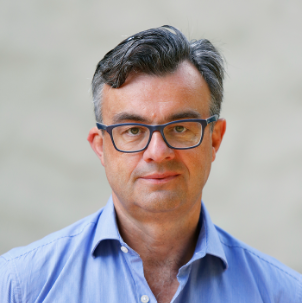
Keynote Speaker
Dr. Emmanuel Candès
Barnum-Simons Chair in Mathematics and Statistics and Professor of Electrical Engineering (by courtesy), Stanford University
Title
To Diffuse or Not? One-step Generative Modeling via Wasserstein Flows
Abstract
Diffusion models and flow-based methods have shown impressive generative capability, especially for images, but their sampling is expensive because it requires many iterative updates. We introduce W Flow}, a framework for training a generator that transforms samples from a simple reference distribution into samples from a target data distribution in a single shot. This is achieved in two steps: we first define an evolution from the reference distribution to the target distribution through a Wasserstein gradient flow that minimizes an energy functional; second, we train a static neural generator to compress this evolution into one-step generation. We instantiate the energy functional with the Sinkhorn divergence, which yields an efficient optimal-transport-based update rule that captures global distributional discrepancy and improves coverage of the target distribution. W Flow sets a new state of the art for one-step ImageNet 256 X 256 generation, achieving high fidelity, with improved mode coverage and domain transfer. Compared to multi-step diffusion models with similar fidelity scores, our method yields approximately 100Xfaster sampling.
Biography
Emmanuel Candès is the Barnum-Simons Chair in Mathematics and Statistics at Stanford University, and Professor of Electrical Engineering (by courtesy). His research interests lie at the interface of statistics, information theory, signal processing and computational mathematics. He received his Ph.D. in statistics from Stanford in 1998. Candès has received several awards including the Alan T. Waterman Award from NSF, which is the highest honor bestowed by NSF to early-career scientists, and the MacArthur Fellowship, popularly known as the ‘genius award’. He has given over 100 plenary lectures at major international conferences, not only in mathematics and statistics but in many other areas as well including biomedical imaging and solid-state physics. He was elected to the National Academy of Sciences and to the American Academy of Arts and Sciences in 2014. He received the 2020 Princess of Asturias Award for Technical and Scientific Research.
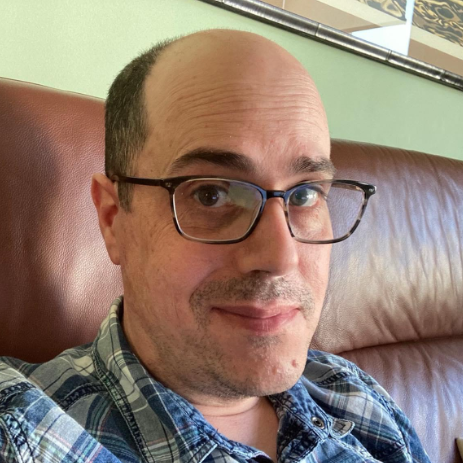
Keynote Speaker
Dr. John Scott
Director of the Division of Biostatistics & Acting Deputy Director of the Office of Biostatistics and Pharmacovigilance, FDA’s Center for Biologics Evaluation and Research
Title
Statistical Innovation in Regulatory Science and the Limits of Inference
Abstract
In this talk, I will review the past 10 years of statistical advances in regulatory science. I will focus on FDA initiatives including guidance documents in the areas of adaptive designs, complex and innovative trials, and the use of Bayesian methodologies in clinical trials. I will discuss examples where these approaches have been used in practice to support development or approval of medical products. After that, I will shift to survey changes on the horizon in the drug development process and discuss their implications for statistics and statisticians and how we can contribute in cases where hypothesis testing and inference may not be the right tools for the job.
Biography
John Scott is Director of the Division of Biostatistics and currently acting Deputy Director of the Office of Biostatistics and Pharmacovigilance in FDA’s Center for Biologics Evaluation and Research. Prior to joining the FDA in 2008, he worked in psychiatric clinical trials at the Western Psychiatric Institute and Clinic of the University of Pittsburgh Medical Center. He has authored or co-authored numerous articles in areas including Bayesian and adaptive clinical trial design and analysis, vaccine and drug safety, data and text mining, and benefit-risk assessment. He is the CBER lead for 21st Century Cures and PDUFA efforts in Complex and Innovative Trial Design and has been heavily involved in a number of FDA’s statistical policy and outreach projects, including the 2019 Adaptive Design Guidance for Drugs and Biologics, the 2020 Guidance on Interacting with the FDA on Complex Innovative Trial Design, the ICH E9(R1) expert working group on estimands and sensitivity analyses, and the 2025 draft Guidance on the Use of Bayesian Methodology in Clinical Trials of Drug and Biological Products. Dr. Scott holds a Ph.D. in Biostatistics from the University of Pittsburgh, an A.M. in Mathematics from Washington University in St. Louis, and a B.A. in Liberal Arts from Sarah Lawrence College. He is a Fellow of the American Statistical Association and is a past Editor of the journal, Pharmaceutical Statistics.
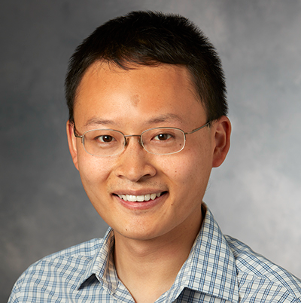
Keynote Speaker
Dr. James Zou
Associate Professor of Biomedical Data Science, and of Computer Science and Electrical Engineering (by courtesy), Stanford University
Title
AI agents to accelerate scientific discoveries.
Abstract
AI agents—large language models equipped with tools and reasoning capabilities—are emerging as powerful research enablers. This talk will explore how agentic AI can accelerate scientific discoveries. I’ll first introduce the Virtual Lab—a collaborative team of AI scientist agents conducting in silico research meetings to tackle open-ended research projects. As an example application, the Virtual Lab designed new nanobody binders to recent Covid variants that we experimentally validated. Then I will introduce Paper2Agent, a framework to automatically convert passive research papers into interactive AI agents. Finally I will discuss learnings from Agents4Science, the first conference where the authors and reviewers are primarily AI systems.
Biography
James Zou is an associate professor of Biomedical Data Science, CS and EE at Stanford University. He works on developing cutting-edge AI for biomedical applications. His group developed many widely used innovations including EchoNet AI (FDA cleared for assessing cardiac function), Gradio (used by over a million developers), and SyntheMol (NY Times 2024 Good Tech). He has received the Overton Prize, Sloan Fellowship, NSF CAREER Award, two Chan-Zuckerberg Investigator Awards, a Top Ten Clinical Achievement Award, best paper awards at ICML and other AI conferences, and faculty awards from Google, Amazon, Adobe and Apple.